
Sourcing & Trade Guide
Wholesale vs. Retail: Which Buying Approach Is Right for You?
Comilmart Team
August 14, 2026
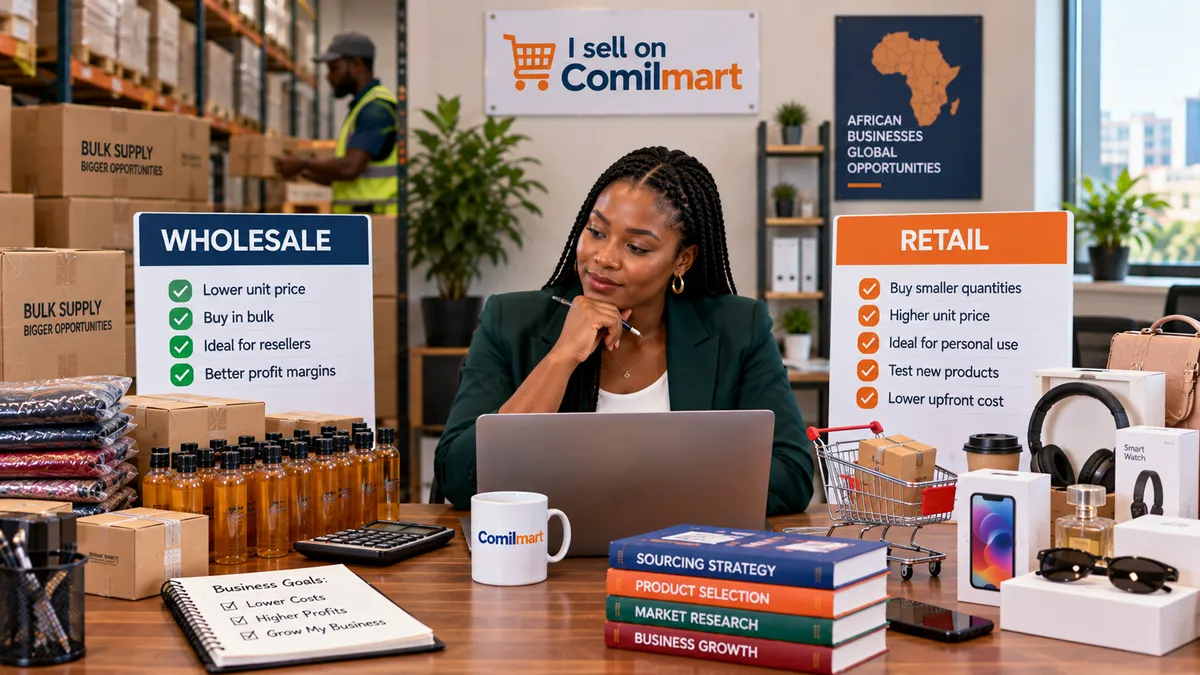
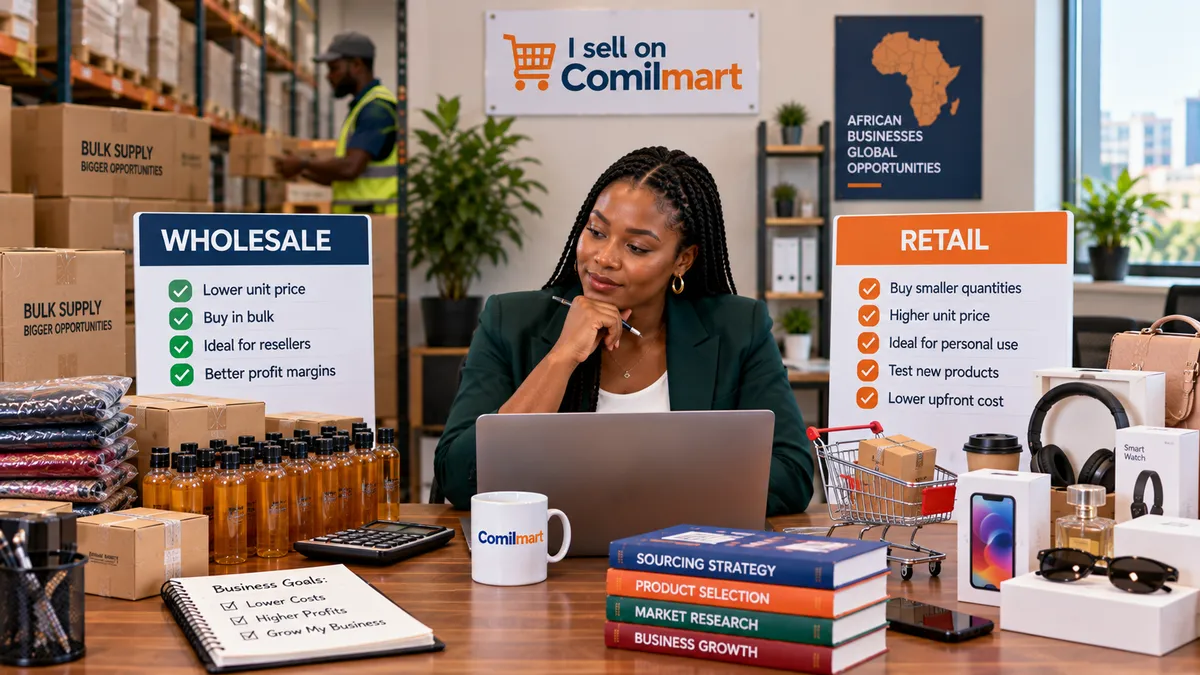
"Buy wholesale and save money" sounds like universally good advice — but it isn't always the right call. The best buying approach depends on what you actually need, how much cash flow you can commit upfront, how quickly you can move inventory, and how much storage space you have to work with. This guide walks through both sides of the decision so you can figure out which one actually fits your situation, rather than defaulting to whichever sounds more sophisticated.
When wholesale makes sense
Wholesale buying is built for volume: you're purchasing directly from a manufacturer or bulk supplier, usually with a minimum order quantity (MOQ), in exchange for a significantly lower per-unit price. This model exists because the fixed costs of production — setting up a manufacturing run, sourcing raw materials, running quality control — get spread across every unit you buy. Buy more units, and each one absorbs a smaller share of those fixed costs.
Wholesale tends to be the better fit if:
- You're reselling the product and need margin to work with. If your business model depends on the spread between what you pay and what you sell for, wholesale pricing is often the only way to make that margin viable at all.
- You have consistent, predictable demand. If you already know, with reasonable confidence, that you'll move a certain volume over a certain period, buying that volume upfront at a lower unit price is a straightforward win.
- You have the storage space and cash flow to hold inventory. Wholesale buying ties up capital and physical space until you sell through what you bought. If you can comfortably absorb that, the math tends to favor bulk.
- You're sourcing something you use regularly in your own business operations — packaging materials, raw ingredients, consumable supplies — rather than something you're reselling directly. The same volume logic applies even when the end customer never sees the wholesale transaction at all.
The hidden costs of wholesale that don't show up in the per-unit price
The headline number on a wholesale listing is the per-unit price, but that's rarely the full picture of what buying in bulk actually costs you. A few things worth factoring in before you commit:
- Storage. Where is this inventory going to physically live until you sell or use it? Warehouse space, even a spare room or garage for a smaller operation, has a real cost — either in rent or in opportunity cost of the space itself.
- Cash flow lockup. Money spent on inventory is money you can't spend on anything else until it converts back to cash through sales. For a smaller business especially, this can meaningfully constrain flexibility elsewhere.
- Shelf life and obsolescence risk. Some products degrade, go out of style, or become outdated. Buying more than you can move within a reasonable window risks writing off unsold inventory entirely.
- Shipping and customs complexity. Larger shipments, especially cross-border ones, often involve more complex logistics and customs handling than a single small parcel would.
None of this means wholesale is a bad idea — it usually isn't, for the right situation. It just means the true cost comparison against retail should include these factors, not just the per-unit price difference on the listing page.
When retail makes more sense
Buying retail — single units or small quantities, at a higher per-unit price — is the better fit in a number of common situations:
- You're testing a new product before committing to volume. If you're not yet sure whether a product will actually sell, or whether it fits your needs, paying a premium for a small quantity to find out is far cheaper than discovering the answer after a large wholesale commitment.
- You need something quickly, without waiting on a bulk shipment. Wholesale orders, especially from overseas manufacturers, often involve longer production and shipping lead times than a retail purchase would.
- Your demand is unpredictable or seasonal. If you genuinely don't know how much you'll need, buying smaller quantities more frequently reduces the risk of over-committing to inventory you can't move.
- You simply don't have the storage space for bulk inventory. This is a practical constraint that no amount of favorable per-unit pricing can solve on its own.
A middle path: request a quote
Wholesale and retail aren't the only two options on the table. If you have a specific need that doesn't cleanly fit either extreme — say, a quantity below the stated MOQ but well above what a single retail purchase would cover — requesting a quote directly from a supplier is often worth trying. Many suppliers have more flexibility in their actual MOQ than their public listing suggests, especially for a buyer who communicates a clear, specific need rather than just asking "can you go lower."
This middle path is also a useful way to test a new supplier relationship without committing to their full stated minimum, similar in spirit to ordering a sample first — you get a taste of working with them at a smaller scale before deciding whether to scale up.
A simple framework for deciding
If you're still unsure which approach fits your situation, work through these questions in order:
- Do I know, with reasonable confidence, how much of this I'll actually use or sell? If no, lean retail or a smaller trial quantity first.
- Do I have the physical space and cash flow to hold bulk inventory comfortably? If no, wholesale's lower unit price may not translate into an actual net benefit once storage and cash-flow costs are factored in.
- Is this a one-time need or an ongoing, recurring one? Recurring needs tend to justify the extra complexity of setting up a wholesale relationship; one-off needs often don't.
- Have I verified this specific supplier is reliable enough to trust with a larger order? If you haven't yet, consider a smaller trial order or sample first, regardless of which buying model you ultimately choose.
The bottom line
Neither wholesale nor retail is inherently the "smarter" way to buy — they're tools suited to different situations. Wholesale rewards predictable, recurring demand and the capacity to hold inventory; retail rewards flexibility and lower commitment when your needs are smaller, uncertain, or time-sensitive. The right choice comes down to being honest with yourself about your actual demand, storage capacity, and cash flow — not which option sounds more impressive.