
Sourcing & Trade Guide
How to Identify a Trustworthy Supplier Before Your First Order
Comilmart Team
August 14, 2026
Sourcing from a new supplier always carries some risk. Whether you're a business buying wholesale for the first time or a shopper trying an unfamiliar seller, the biggest risk in online sourcing isn't price — it's trust. A supplier who quotes 15% cheaper than everyone else isn't a good deal if the order never arrives, or arrives nothing like what was promised. This guide walks through a practical, repeatable process for evaluating a supplier before you commit real money to your first order.
Why trust matters more than price
It's tempting to sort every search result by price and go with whoever's cheapest. But price is the easiest thing for a bad actor to fake — a listing with an unrealistically low price and no verification behind it is often exactly that: a red flag dressed up as a bargain. The suppliers worth working with aren't necessarily the cheapest; they're the ones who can actually deliver what they promise, consistently, order after order. Building a sourcing strategy around trust first and price second will save you far more money over time than chasing the lowest number on the page.
Look for verified status, not just claims
Anyone can write "trusted supplier" or "100% reliable" on their profile page — text is free, and it costs a bad-faith seller nothing to make bold promises. What actually matters is whether the marketplace itself has verified the business behind the listing: checking business registration documents, tax details, and real contact information before letting a seller open a storefront at all.
On Comilmart, manufacturers go through a Know Your Supplier (KYS) review before their storefront goes live. That review checks the fundamentals — is this a real, registered business, and are the people behind it who they say they are — before a single product can be listed. A "Verified" badge on a profile means someone actually did that legwork, not that the seller simply typed the word "verified" into their bio.
It's worth understanding what verification does and doesn't guarantee. Verification confirms the business is real and has passed a documentation check — it doesn't guarantee every single transaction will go perfectly. Think of it as a strong first filter, not a total guarantee. You still want to layer the other checks in this guide on top of it.
Check how long they've been active, and their order history
A supplier with a track record of completed orders and real buyer reviews gives you far more confidence than a brand-new, unreviewed profile. Look specifically at:
- Sales count — how many completed orders does this seller actually have? A handful of sales isn't disqualifying for a new supplier, but it does mean you're taking on more of the "figuring it out together" risk than you would with an established one.
- Review scores and review content — don't just glance at the star rating. Read a handful of the actual written reviews. A 4.8-star average built on one-word reviews tells you less than a 4.3-star average with detailed, specific feedback about product quality and communication.
- Recency of activity — a storefront that hasn't shipped anything in the last several months, even if it has old positive reviews, is worth a direct message before you order. Businesses close, change hands, or simply go quiet, and old reviews don't tell you anything about whether they're still operating well today.
Ask for real product photos, not just catalog images
Stock photography and manufacturer catalog images can hide a lot. They're often supplied by the original equipment source, not the specific seller you're buying from, and they may not reflect the actual batch, packaging, or quality control you'll receive. A supplier who's willing to share real production photos, actual packaging as it ships, or a short video of their facility is showing you something a polished catalog image simply can't.
If a seller is reluctant to provide any of this when you ask directly — dodging the question, sending the same stock image again, or going quiet — treat that as meaningful information. A legitimate manufacturer with nothing to hide is usually happy to show you their actual operation, because it's a point of pride, not a liability.
Start small if you're unsure
You don't have to commit to a full container order on day one, even if the per-unit price looks better at higher volume. Many suppliers accommodate a smaller trial order first — sometimes a formal "sample," sometimes just their smallest available quantity tier. This lets you evaluate quality, communication responsiveness, and delivery reliability before you scale up your relationship with real volume.
Treat this first small order as a genuine test, not just a formality. Pay attention not only to the product itself but to how the whole process felt: Did they respond quickly to your questions? Was the packaging what you'd expect? Did the shipment arrive when they said it would? All of that is information you're paying a small premium to learn before committing to a much larger order.
Read the fine print on lead times and minimum order quantities
Trustworthy suppliers tend to be specific and consistent about their lead times and MOQs, rather than vague or constantly shifting. If a seller quotes "2-3 weeks" for production but that number keeps changing every time you follow up, or if their listed MOQ mysteriously grows once you've expressed serious interest, those are signals worth paying attention to. Reliable partners are usually the ones who tell you the less convenient truth upfront rather than the more convenient one that turns out to be wrong later.
Pay attention to how they communicate, not just what they say
Communication quality during the sales process is often the single best predictor of what working with a supplier will actually be like after you've paid. Notice whether they answer the specific question you asked, or give you a generic response that could apply to any buyer. Notice how quickly they respond, and whether that pace holds steady or drops off once you've expressed interest but haven't paid yet. A supplier who is thorough, specific, and consistently responsive before you've committed any money is a strong signal of what to expect afterward.
Use buyer protection as your safety net, not your only check
Even with all the diligence in the world, things occasionally go wrong — a shipment gets delayed by customs, a batch doesn't quite match the sample, a miscommunication happens somewhere along the way. That's exactly what buyer protection exists for: payment held securely until you confirm your order, with a clear path to a refund if something genuinely isn't right.
Treat buyer protection as your backstop, not your only line of defense. It exists precisely because no amount of upfront research eliminates all risk — but it shouldn't be the reason you skip doing that research in the first place. The suppliers who pass every check in this guide are also, unsurprisingly, the ones you're least likely to ever need buyer protection with at all.
Putting it all together: a quick pre-order checklist
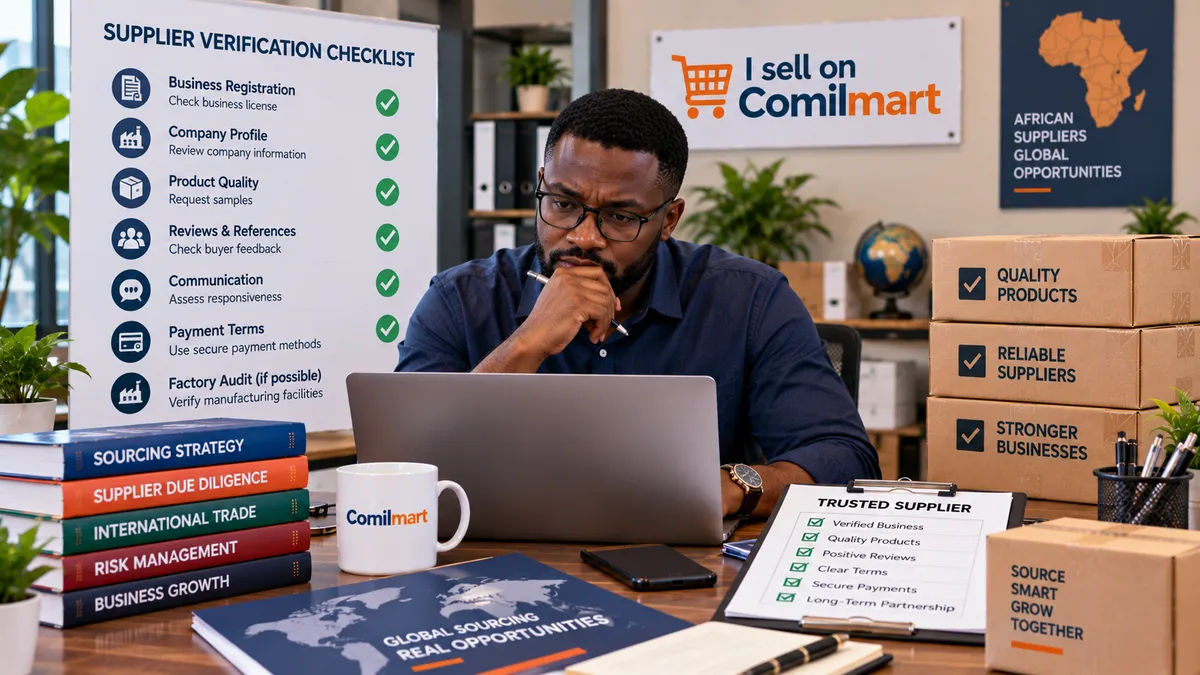
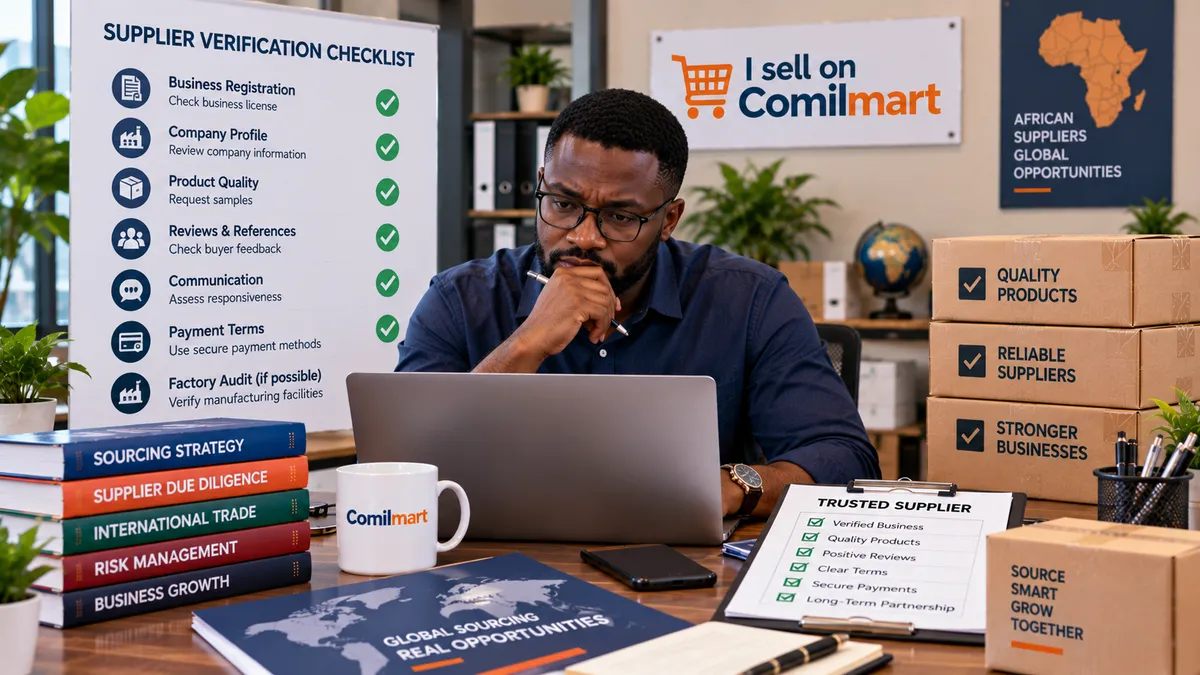
- Is the supplier verified through a real documentation check, not just a self-reported label?
- Do they have a real order history and genuine, detailed reviews?
- Have they shared real production photos or video when asked, not just catalog images?
- Are their lead times and MOQ specific and consistent, rather than vague or shifting?
- Has your communication with them so far been thorough, specific, and responsive?
- If you're still unsure, is a smaller trial order available before you commit to full volume?
The bottom line
Trust is built from a combination of verification, track record, transparency, and a platform that has your back if something goes wrong. None of these checks take more than a few extra minutes individually, but together they meaningfully change the odds in your favor before you ever commit real money to an order. Take the time to work through all of them before you commit — your future self, unpacking a shipment that actually matches what you ordered, will thank you.