
Sourcing & Trade Guide
Understanding ECOWAS Trade Regulations for Cross-Border West African Commerce
Comilmart Team
August 22, 2026
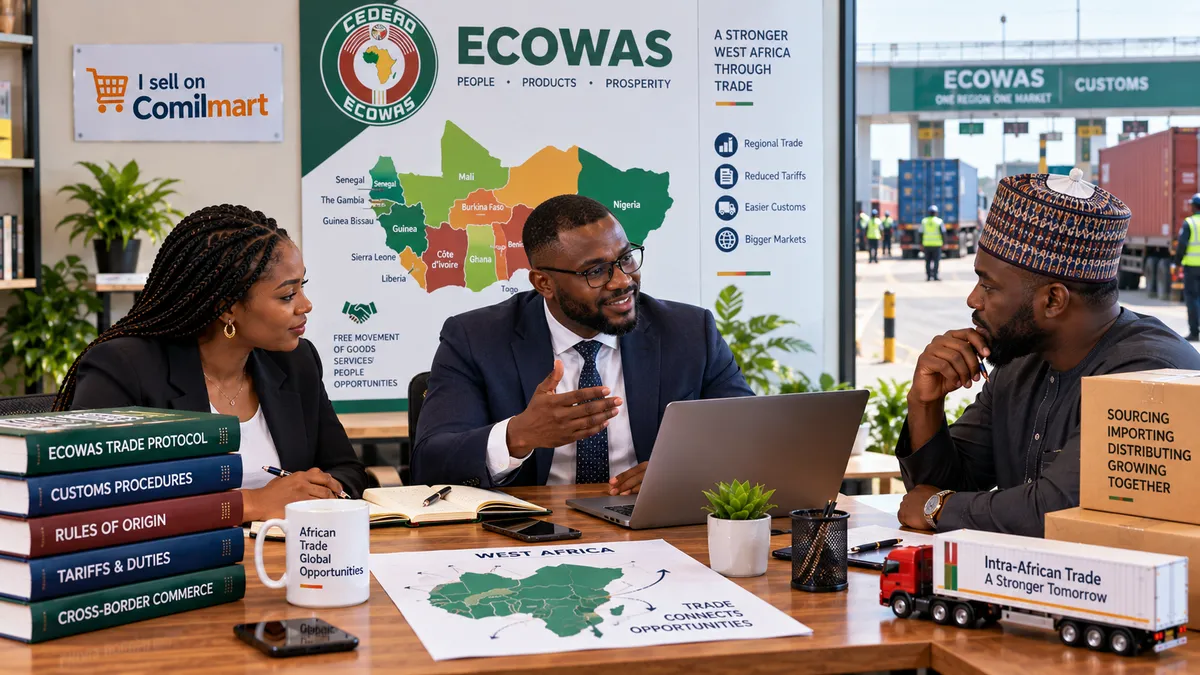
The Economic Community of West African States (ECOWAS) is a 15-member regional bloc that has worked, with varying degrees of success over the decades, to reduce trade barriers between West African nations. For buyers and sellers engaged in cross-border West African commerce, understanding how ECOWAS trade frameworks actually function — separate from, but related to, the broader continental AfCFTA process — provides useful context for navigating the region.
What ECOWAS actually is
ECOWAS is a regional economic community comprising 15 West African countries, established with the goal of promoting economic integration across the region, including trade liberalization between member states. Unlike AfCFTA, which spans the entire African continent and represents a more recent, continent-wide initiative, ECOWAS has existed since 1975 and represents a longer-standing, more geographically focused regional integration effort specifically for West Africa.
The ECOWAS Trade Liberalization Scheme
The core trade mechanism within ECOWAS is the Trade Liberalization Scheme (ETLS), designed to allow goods that genuinely originate within the region to move between member states without import duties. Similar in spirit to AfCFTA's rules of origin requirements, ETLS benefits apply specifically to goods meeting defined origin criteria — meaning a product needs to be approved under the scheme and meet the relevant local content or production requirements to qualify for duty-free treatment when moving between ECOWAS member states.
In practice, implementation of ETLS has been genuinely uneven across the region and across different product categories — some goods and trade corridors see the scheme working reasonably smoothly, while others continue to face real friction despite the formal framework existing. This is worth understanding honestly rather than assuming the scheme guarantees frictionless trade everywhere within the region.
ECOWAS and the West African CFA franc zone
A meaningful subset of ECOWAS member states — specifically the West African Economic and Monetary Union (UEMOA) countries — share a common currency, the West African CFA franc, which removes currency conversion friction for trade between those specific countries in a way that doesn't apply to trade with the broader ECOWAS membership using different national currencies. For a buyer or seller specifically trading between CFA franc zone countries, this represents a genuine, practical simplification worth understanding separately from the broader ECOWAS trade framework.
How ECOWAS relates to AfCFTA
It's worth understanding that ECOWAS and AfCFTA aren't competing frameworks — ECOWAS represents a more established, West-Africa-specific regional integration effort, while AfCFTA represents a broader, continent-wide framework layered on top. For trade specifically between two ECOWAS member states, the ECOWAS framework (ETLS) is often the more directly relevant mechanism given its longer history and more region-specific implementation, while AfCFTA becomes more directly relevant for trade between a West African country and a country in a different African region entirely, outside ECOWAS.
Practical documentation for ECOWAS cross-border trade
Beyond the standard export documentation relevant to any international shipment — commercial invoice, packing list, certificate of origin — goods intended to benefit from ETLS duty-free treatment typically need specific approval or certification confirming ECOWAS origin, which is a separate, additional step from a standard certificate of origin used for trade outside the region. This approval process varies by member state, and working with a freight forwarder or customs broker genuinely experienced in intra-ECOWAS trade specifically — not just general export documentation — is worth the investment for a business planning genuine, ongoing intra-regional trade.
Common friction points in practice
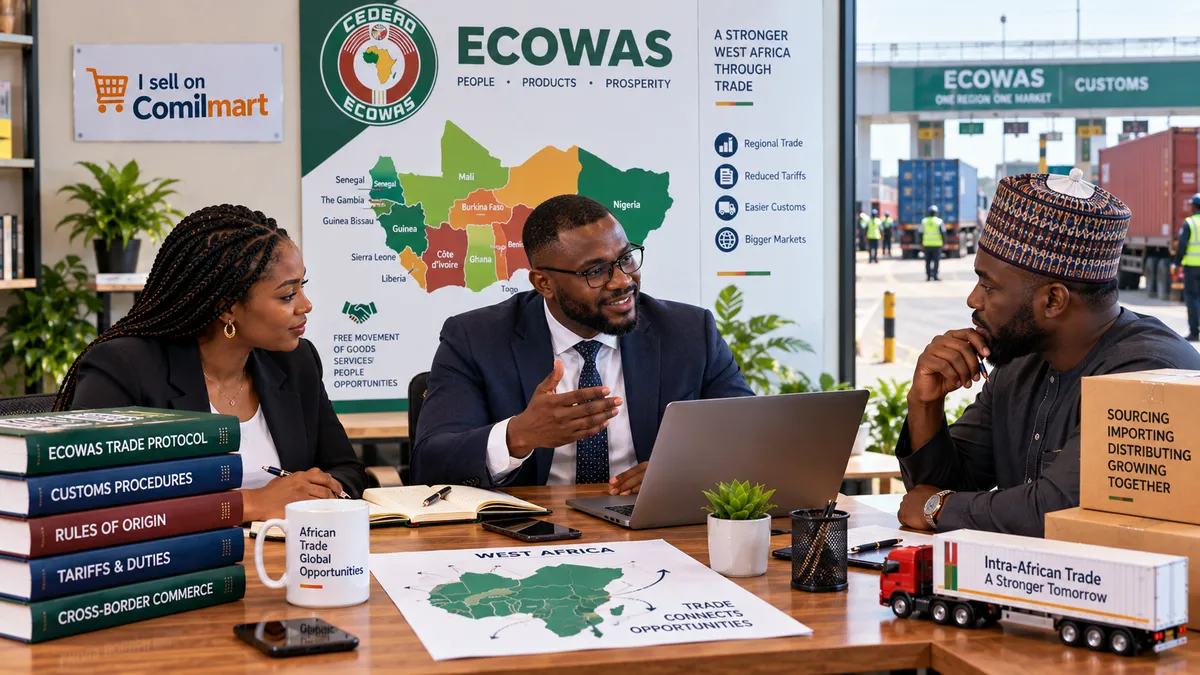
Despite the formal ETLS framework, businesses trading across West African borders have historically reported real, practical friction at various border crossings — inconsistent application of the scheme by different border officials, informal charges not reflected in the formal duty structure, and documentation requirements that vary more in practice than the formal framework suggests they should. This isn't universal, and has genuinely improved over time in various corridors, but it's honest context worth having rather than assuming the formal framework fully reflects the practical, on-the-ground experience of every specific border crossing.
Businesses with real, ongoing intra-ECOWAS trade often report that working with an experienced local logistics partner familiar with the specific border crossings and current practical realities makes a genuine difference compared to relying purely on the formal documentation framework alone.
What this means for buyers and sellers on a platform like Comilmart
For a buyer specifically sourcing from a West African supplier in a different ECOWAS member state than their own, understanding whether ETLS benefits genuinely apply to the specific product and origin combination is worth checking directly, since it can meaningfully affect landed cost. For a seller, being able to speak specifically and credibly about ECOWAS origin certification for their products — rather than a vague general claim about "duty-free regional trade" — is a genuine credibility signal to buyers who understand the actual framework.
For the continent-wide framework that operates alongside ECOWAS, see our guide on doing business under AfCFTA.
Frequently asked questions
Does ECOWAS membership automatically mean duty-free trade between any two member countries?
No — duty-free treatment specifically requires the goods to qualify under the Trade Liberalization Scheme's origin rules and, in many cases, formal approval/certification of that origin status, rather than being automatic simply because both countries are ECOWAS members.
Is trade between CFA franc zone countries within ECOWAS meaningfully easier than trade with non-CFA ECOWAS members?
Currency-wise, yes — sharing a common currency removes conversion friction that exists when trading with ECOWAS members using different national currencies. This is a distinct benefit from the trade liberalization scheme itself, worth understanding separately.
How do I find out if ETLS benefits apply to my specific product and trade route?
Checking with the relevant national trade or customs authority in either the origin or destination country, or working with a customs broker experienced in the specific trade corridor, gives you a more reliable answer than general assumptions about the scheme's coverage.
The bottom line
ECOWAS represents a genuine, longer-standing regional trade integration effort specific to West Africa, with real benefits available through the Trade Liberalization Scheme for goods that qualify — though practical implementation varies by country, product category, and specific border crossing. Understanding both the formal framework and the honest, practical realities of how it functions on the ground gives buyers and sellers a more accurate picture than relying on the formal documentation alone.