
Sourcing & Trade Guide
Sample Ordering: Try Before You Commit to a Bulk Order
Comilmart Team
August 20, 2026
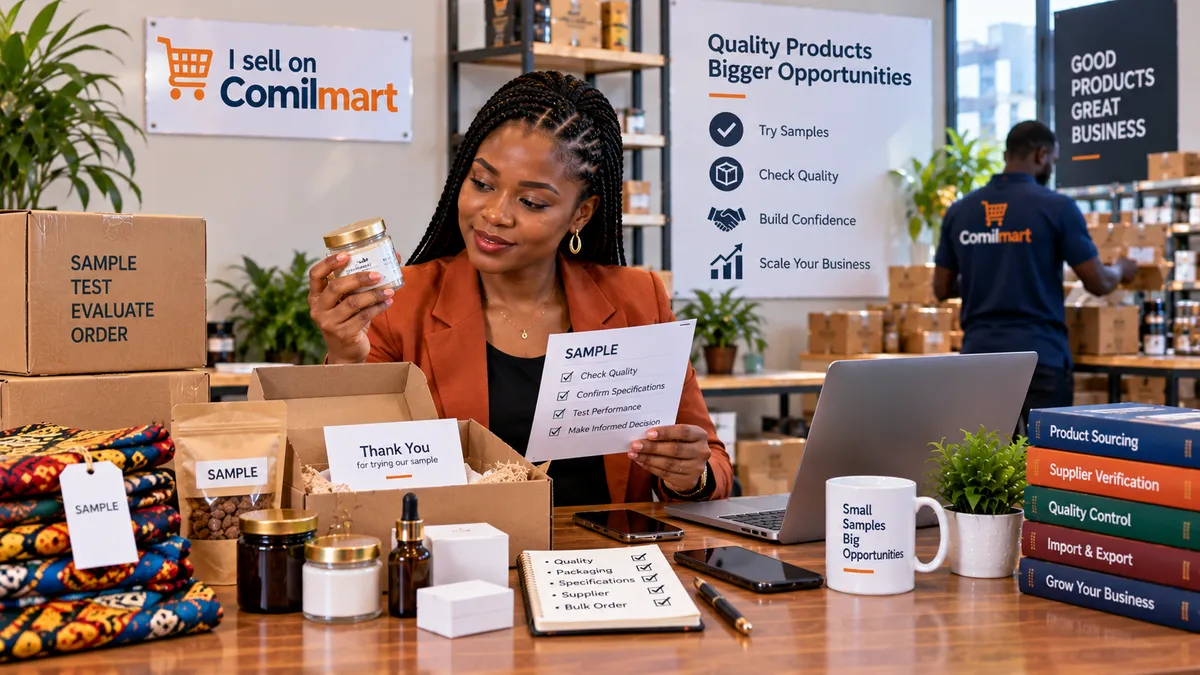
One of the biggest hesitations in wholesale buying is committing to a large order from a supplier you haven't worked with before. A photo on a listing page, however detailed, can only tell you so much — real material quality, exact color accuracy, packaging condition, and how a supplier actually handles a transaction from order to delivery are all things you genuinely can't know until you've experienced them firsthand. Sample ordering solves exactly this problem, and this guide walks through how it works, why it matters more than buyers often realize, and how to use it effectively.
How it works, step by step
Where a supplier offers it, you'll see an "Order a sample" option directly on the product listing — alongside requesting a quote or making a price offer. The process is straightforward: you choose a quantity, up to the supplier's stated maximum sample size, pay for it exactly like any normal order, and it ships to you the same way a full order would. There's no separate approval process or special account status required — it's a genuine, standard transaction, just at a deliberately smaller scale.
What you're actually checking with a sample
A sample lets you evaluate the specific things a listing photo and description genuinely can't fully convey:
- Real material quality. Fabric weight, plastic rigidity, metal finish — the physical properties of a product are far easier to assess by holding the actual item than by looking at even a well-lit, high-resolution photo.
- Color and finish accuracy. Screen colors vary by device and lighting, and a listing photo's color can differ meaningfully from the physical product. A sample removes this ambiguity entirely.
- Packaging as it actually ships. If packaging condition matters for your use case — retail-ready presentation, protection during shipping — a sample shows you exactly what arrives, rather than an idealized studio photo of packaging that might not match your real shipment.
- How the supplier handles a real transaction. Beyond the product itself, a sample order tells you how quickly the supplier processes an order, how accurately their stated lead time holds up in practice, and how smoothly the whole process goes from payment to delivery — all genuinely useful signals for what a much larger order with the same supplier would likely be like.
It's a real order, not a special exception
This is worth emphasizing clearly: sample orders go through the same buyer protection and payment-holding process as any other order on Comilmart. If something's genuinely wrong with a sample — it doesn't match the listing, arrives damaged, never ships at all — you have exactly the same recourse you would on a full order, just at a much smaller financial commitment while you're still building confidence in the relationship.
After the sample: what to do with what you learned
If you're satisfied with the sample, moving forward with a full order through Request a Quote or Make an Offer is the natural next step — sample ordering doesn't automatically create a bulk order on its own, it's specifically the trial step before one. Reference your sample experience directly when you move to the full order conversation; mentioning that you've already received and evaluated a sample often streamlines the negotiation, since the supplier knows you're a genuinely serious, informed buyer rather than someone still deciding whether the category is even right for them.
If the sample reveals a real problem — quality doesn't match expectations, communication was slow or unclear, delivery took meaningfully longer than promised — you've learned that at the cost of a sample rather than discovering it after committing to a full bulk order. That's precisely the point: a sample is a deliberately low-cost way to fail fast if a particular supplier relationship isn't going to work out, before you've put significant money on the line.
Not every listing offers this — what to do if it doesn't
Sample availability is something each supplier chooses to enable on their listing, along with their own sample price and maximum quantity. If you don't see the option on a listing you're genuinely interested in, it's worth messaging the supplier directly to ask whether they'd accommodate a smaller trial order even without a formal sample option listed. Many suppliers are more flexible about this than their public listing suggests, particularly for a buyer who communicates a clear, specific interest in eventually placing a larger order.
How to evaluate a sample thoroughly, not just glance at it
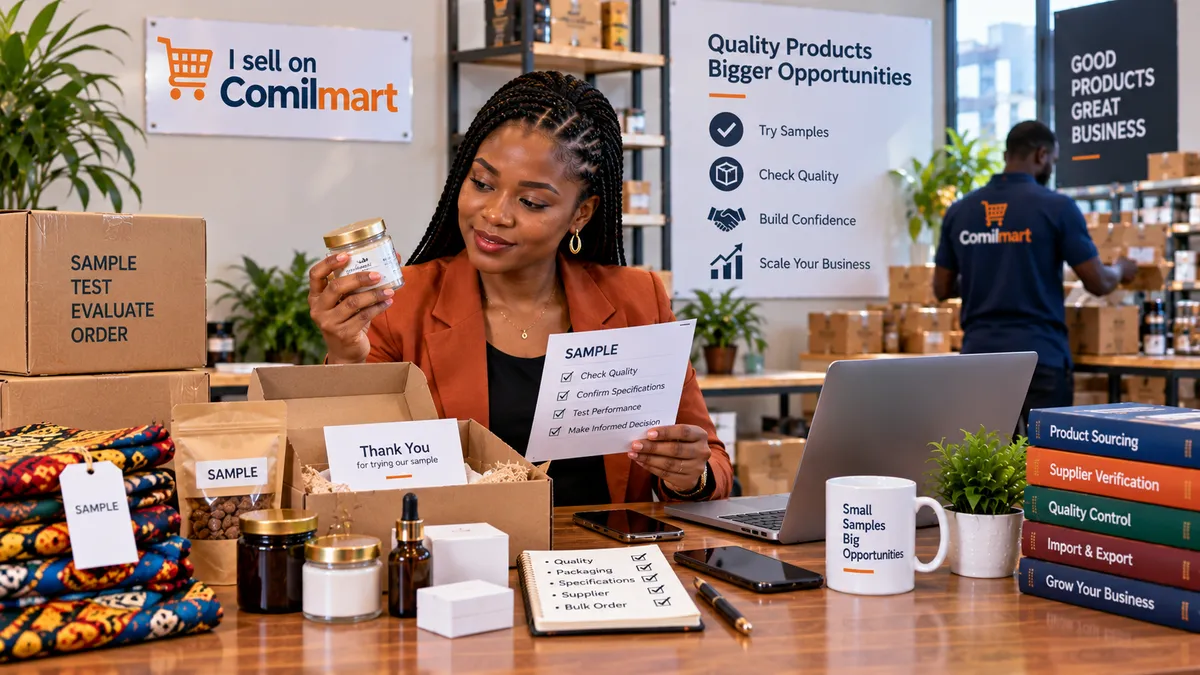
Getting real value from a sample order means actually evaluating it deliberately rather than a quick glance before setting it aside. A few practical steps:
- Compare it directly against the listing — photos, description, and any stated specifications — rather than relying on general impression alone.
- Check it under different lighting if color accuracy matters for your use case, since a single lighting condition can be misleading.
- Test it under realistic conditions where relevant — if it's a functional product, actually use it the way your end customer or your business would, rather than just visual inspection.
- Note the actual delivery timeline against what was promised, as a genuine data point for what a full order's timeline is likely to look like.
- Keep records — photos of the sample as received, and notes on your evaluation — both for your own reference and in case you need to reference them in a later conversation with the supplier.
When sample ordering is especially worth the extra step
While it's a good practice generally for any new supplier relationship, sample ordering is particularly valuable in a few specific situations: when you're sourcing from a supplier or region you haven't worked with before and don't yet have an established basis for trust; when color, material feel, or fine detail genuinely matters for your use case in a way photos struggle to convey; when you're considering a first-time custom or branded order and want to confirm the supplier can execute your specific requirements before committing to a larger custom production run; or simply when the order size you're considering represents a genuinely significant financial commitment relative to your business, where the cost of being wrong is high enough to justify the extra step.
Frequently asked questions
Does ordering a sample commit me to placing a full order afterward?
No — a sample order is a complete, standalone transaction with no obligation attached to place any further order. If the sample doesn't meet your expectations, you're free to simply not proceed further with that supplier.
Is sample pricing usually much higher per unit than the full wholesale price?
Often somewhat higher, yes — this generally reflects the supplier's real cost of fulfilling a small, individual order compared to their efficient bulk production and shipping process. The premium is usually modest relative to the value of the information you gain, but it's worth checking the specific sample price before ordering.
Can I request a custom sample with my own specifications, rather than the supplier's standard product?
This varies by supplier and product category — some accommodate a custom sample for an additional fee or longer lead time, particularly for buyers seriously considering a larger custom order. It's worth asking directly if this fits your specific need.
A worked example: what a sample-first approach actually saves you
Consider a buyer planning a wholesale order of 1,000 units of a home goods product, at roughly $3.50 per unit — a total commitment of $3,500. Rather than placing that full order directly, they first order a sample of 5 units for $12 each, a total of $60. Upon inspection, they discover the actual material has a noticeably different texture than the listing photos suggested — not necessarily lower quality, but not matching what they specifically needed for their intended use.
Because this was caught through a $60 sample rather than discovered after receiving $3,500 worth of inventory, the buyer can simply move on to a different supplier whose sample better matches their needs, having spent a small fraction of the full order cost to learn something decisive. This is the core economic logic behind sample ordering: the cost of being wrong scales down dramatically, while the value of the information gained stays essentially the same regardless of the eventual order size.
Sample ordering as part of a broader supplier evaluation
A sample is one input among several worth combining when evaluating a new supplier relationship, not necessarily the only one. Alongside checking a sample, it's worth reviewing the supplier's verification status, their response rate and average response time if visible on their profile, and any existing buyer reviews. A strong sample combined with strong signals across these other areas gives you meaningfully more confidence than any single check alone — and if the sample itself raises a concern, that's often reason enough to pause and investigate further before any other positive signal outweighs it.
Ordering multiple samples from different suppliers at once
For buyers genuinely undecided between several potential suppliers for the same product category, ordering samples from more than one supplier simultaneously — rather than sequentially — is a practical way to make a direct, side-by-side comparison without extending your overall evaluation timeline. This does mean a somewhat higher total sample cost upfront, but for a purchasing decision of real significance, the ability to compare actual physical samples against each other directly, rather than relying on memory or notes between sequential sample orders placed weeks apart, is often worth the modest additional cost.
Frequently asked questions, continued
Should I tell a supplier upfront that I'm ordering a sample specifically to evaluate them before a larger order?
Being transparent about this is generally a good approach — most suppliers understand and expect this, and being upfront about your intention to potentially place a larger order afterward can sometimes prompt a supplier to be extra attentive to your sample order specifically, knowing a bigger opportunity may follow.
What if the sample is good but I still have questions before committing to a full order?
A satisfactory sample doesn't mean you need to skip further conversation — it's completely reasonable to follow up with additional specific questions about production capacity, lead time for your intended full order size, or any other detail before moving forward with a larger commitment.
Is there a limit to how many times I can order a sample from the same supplier?
This depends on the specific supplier's own sample policy and stated maximum quantity, but generally, ordering a sample once to make an informed decision is the intended use — repeatedly ordering samples without ever placing a full order isn't the purpose the feature is designed for.
A quick checklist before you order a sample
- Check whether the listing offers a sample option, and note the price and maximum quantity
- If no sample option is listed, ask the supplier directly whether they'd accommodate a smaller trial order
- Decide upfront what specific things you're evaluating — material, color, function, delivery timing — so your review is deliberate rather than a quick glance
- Compare the sample directly against the original listing photos and description once it arrives
- Keep notes and photos of your evaluation for future reference, especially if you're comparing multiple suppliers
Working through this short list before and after ordering a sample turns the process from a nice-to-have step into a genuinely rigorous part of your sourcing evaluation — exactly the kind of habit that separates buyers who consistently find reliable suppliers from those who learn the hard way, one large order at a time.
The bottom line
Sample ordering is one of the most genuinely useful, low-risk tools available to a wholesale buyer working with a new supplier. It turns "trusting a listing page and hoping" into "actually knowing," at a fraction of the cost of a full bulk order — and it's backed by the same buyer protection as any other purchase. If you're considering a supplier you haven't worked with before and a sample option is available, using it is almost always worth the small additional step before committing to a larger order.