
Sourcing & Trade Guide
Africa's Growing Export Categories International Buyers Are Sourcing Right Now
Comilmart Team
August 20, 2026
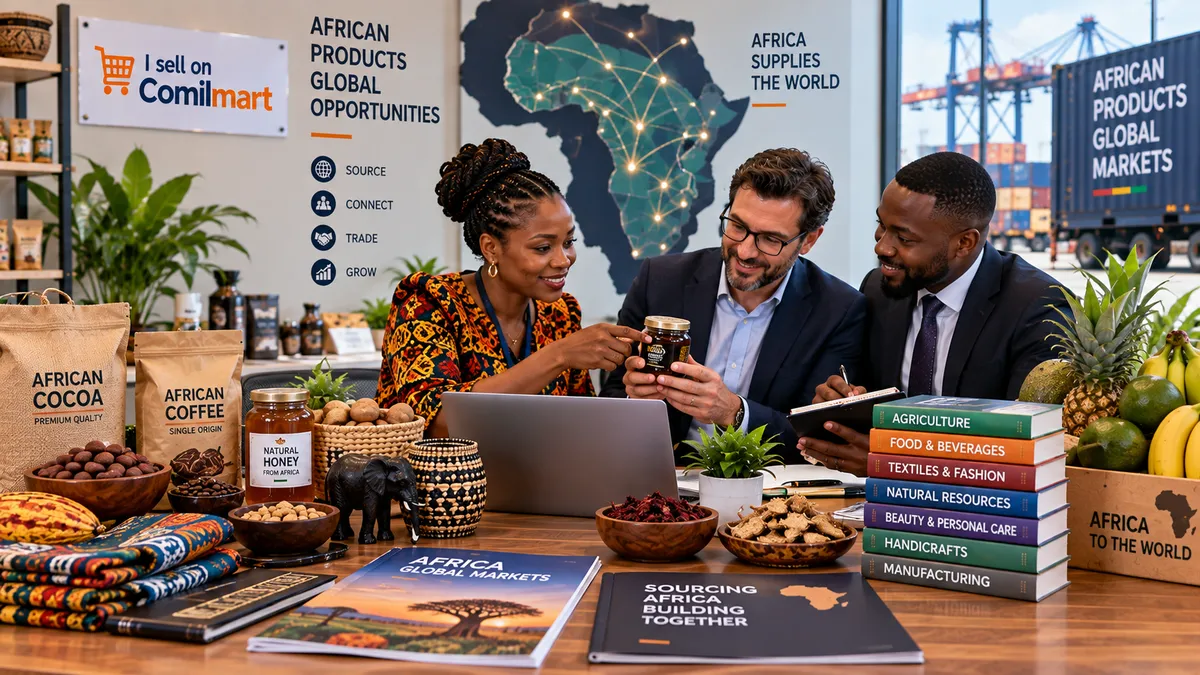
African exports have been diversifying well beyond the traditional raw commodities most international buyers still associate with the continent. A growing manufacturing and processing base, expanding logistics infrastructure, and increasingly accessible verified marketplace platforms have combined to open up genuinely competitive sourcing opportunities across several product categories seeing real momentum right now. This guide takes a closer look at where that momentum is strongest, and what it means for buyers considering these categories for the first time.
Agro-processed goods
Rather than exporting raw cocoa beans, coffee cherries, or shea nuts, a growing share of African producers are processing these goods locally before export — cocoa butter and powder, roasted and ground coffee, refined and packaged shea butter. This shift matters for buyers in two significant ways: it means sourcing a more finished, higher-value product directly, rather than needing to arrange separate processing yourself after import, and it reflects genuine, sustained investment in local processing capacity rather than a temporary trend.
West Africa in particular has developed strong capacity in cocoa and shea processing specifically, while East Africa has built comparable strength in coffee processing. For buyers in the food, cosmetics, or wellness product categories, sourcing processed agro goods directly from these regions increasingly offers a genuinely competitive alternative to importing raw materials and arranging your own processing separately.
Textiles and apparel
African textile manufacturing — spanning raw fabric production through to finished garments — has grown into a genuinely competitive alternative sourcing region, particularly attractive to buyers looking to diversify their supply chains beyond traditional manufacturing hubs that have grown more saturated or costly in recent years. Manufacturing capacity spans the full range from smaller, craft-oriented producers to larger-scale garment factories capable of significant production volume.
For buyers in fashion, uniform manufacturing, or textile-based product categories, this represents a genuine opportunity to diversify sourcing regions — reducing dependency on a single manufacturing hub, which carries real supply chain resilience benefits beyond just the pricing consideration.
Handcrafted goods and artifacts
Handwoven textiles, wood carvings, beadwork, and other artisan-made goods have a genuinely growing international market among buyers specifically looking for authentic, distinctive products rather than mass-manufactured alternatives — a category where craftsmanship itself is a core part of the value proposition, not simply a cost consideration. This category tends to attract a different kind of buyer than pure commodity or manufactured-goods sourcing: retailers and businesses building a brand around authenticity, craft, and story alongside the product itself.
Sourcing in this category often involves working with smaller-scale artisan producers or cooperatives rather than large factories, which brings both genuine opportunity (direct relationships, distinctive products unavailable elsewhere) and specific considerations (potentially more variable lead times and production capacity than a large factory would offer, since individual craftsmanship doesn't scale the same way as automated manufacturing).
Health and medical equipment
This is a newer but genuinely growing category, as African manufacturing capacity in medical supplies and basic equipment has expanded meaningfully, creating sourcing opportunities that simply didn't exist at scale even a few years ago. This growth has been driven partly by increased regional investment in healthcare manufacturing self-sufficiency, and partly by growing manufacturing sophistication more broadly across the continent spilling over into this specific sector.
Buyers considering this category should apply particularly careful diligence given the regulatory stakes involved — verifying relevant certifications, confirming a supplier's specific regulatory compliance for your destination market, and generally treating this category with the elevated scrutiny any health-related sourcing decision warrants, regardless of the sourcing region.
Furniture and home goods
Locally sourced materials combined with genuinely growing manufacturing capability have made African-made furniture and home decor an increasingly viable category for international buyers, rather than a purely domestic market as it may have been perceived in the past. This category benefits from access to distinctive, often sustainably-sourced materials — certain hardwoods, natural fibers — that can be a genuine differentiator for buyers in the furniture and home goods space looking for something beyond standard mass-market options.
Why this diversification matters beyond any single category
Taken together, this shift across multiple categories reflects something broader than any single product opportunity: genuine, sustained investment in manufacturing and processing capacity across the continent, rather than a narrow or temporary trend in one specific sector. For buyers, this diversification means African sourcing is increasingly relevant across a much wider range of product needs than it might have been historically associated with, and worth considering as a genuine option across your sourcing strategy more broadly, not just for one narrow category you might already associate with the region.
What buyers new to these categories should keep in mind
The same fundamentals that apply to sourcing from any new region or supplier apply here too, and are worth applying with full rigor rather than assuming any category or region is inherently lower-risk: verify supplier legitimacy through real documentation rather than self-reported claims, ask specific and honest questions about lead time and production capacity, use a sample order where available to evaluate quality before committing to volume, and rely on genuine buyer protection for the cross-border peace of mind that your usual local consumer protections often can't provide across an international transaction.
A regional snapshot: where different categories tend to concentrate
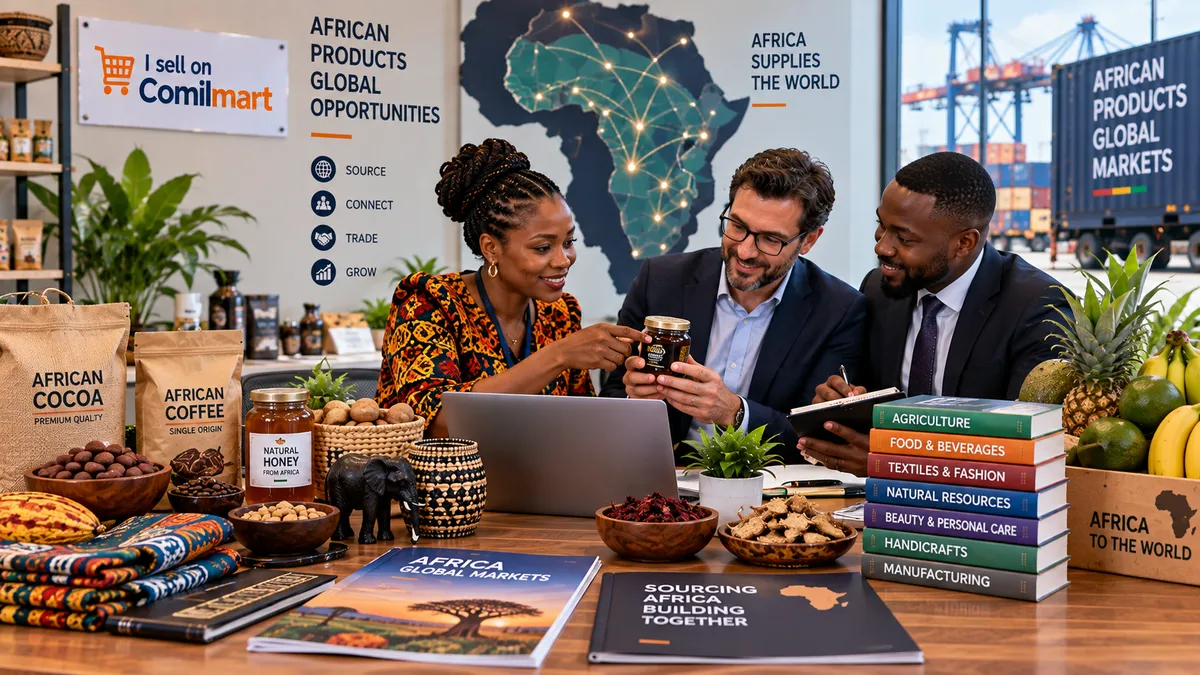
While strong individual suppliers exist across the continent in every category, a few general regional patterns are useful context for buyers narrowing their search:
- West Africa — particularly strong in cocoa and shea-based agro-processing, alongside a growing textile base
- East Africa — strength in coffee processing, horticulture, and leather goods, with an expanding textile sector
- Southern Africa — industrial and mining-adjacent manufacturing, alongside diversified light manufacturing
- North Africa — established textile and automotive component manufacturing, with growing electronics assembly capacity given proximity to European markets
These are general patterns rather than strict boundaries — strong suppliers in any of these categories exist outside these broad regional generalizations too, and a marketplace's verification and category search tools are more reliable for a specific sourcing decision than regional assumptions alone.
Frequently asked questions
Is pricing in these categories generally more competitive than traditional sourcing regions?
Pricing varies by specific product and supplier, similar to any sourcing region — the more useful comparison is landed cost across multiple specific quotes for your actual product need, rather than a general assumption that any single region is uniformly cheaper across every category.
Which of these categories has the most mature, established supplier base for a first-time buyer?
Agro-processed goods and textiles generally have the most established, longer-running manufacturing and export track record among these categories, making them a reasonable starting point for buyers newer to African sourcing specifically, though strong opportunities exist across all five categories covered here.
Should I expect the same certification standards across all these categories?
No — certification relevance and typical standards vary significantly by category, with health and medical equipment carrying the most stringent typical requirements, and handcrafted goods often carrying the least formal certification structure, given the nature of artisan production. Approach certification expectations specific to your particular category rather than a uniform assumption across all of them.
A closer look at the shift from raw commodity to processed export
The move from exporting raw materials to exporting processed, finished goods deserves a bit more explanation, since it's arguably the single most significant underlying trend across several of these categories. Historically, a large share of African export revenue came from raw commodities — unprocessed cocoa, raw cotton, unrefined minerals — with the more valuable processing steps happening elsewhere, closer to the end market. This meant a substantial share of a product's ultimate value was captured outside the country where the raw material actually originated.
The categories highlighted in this guide represent a meaningful shift in that pattern — local processing capacity capturing more of that value before export, rather than shipping raw materials abroad for processing elsewhere. For buyers, the practical implication is straightforward: sourcing a more finished product directly from the origin region, often at a more competitive price than importing raw materials and arranging separate processing yourself, while also supporting a genuinely more sustainable and equitable trade pattern in the process.
Emerging categories worth watching, beyond the core five
Beyond the five categories covered in detail above, a few additional areas show early but genuine momentum worth watching for buyers planning further ahead: packaging materials manufacturing, growing alongside the broader agro-processing sector's own packaging needs; renewable energy components, particularly solar-related equipment, as regional adoption accelerates; and specialty foods and beverages beyond the core cocoa/coffee/shea categories already covered, as smaller producers increasingly reach export-ready scale and quality. None of these are yet as established as the five core categories detailed above, but they're worth keeping on your radar if you're building a longer-term sourcing strategy rather than looking only at what's already fully mature today.
How to start exploring a new category as a buyer
If one of these categories is new territory for you, a practical starting approach: use category-specific search and browsing tools on a verified marketplace to see the current supplier landscape directly, rather than relying on general assumptions about what's available. Reach out to a handful of verified suppliers with genuine, specific questions about their production capacity and export experience, applying the same five-question framework worth using for any new supplier relationship. And where a sample option is available, use it — this is exactly the kind of situation where a small, low-risk trial order pays for itself many times over in the confidence and specific knowledge it provides before any larger commitment.
Frequently asked questions, continued
Are there import considerations specific to sourcing from Africa that differ from other regions?
Specific duty rates, trade agreement eligibility, and documentation requirements vary by your destination country and the specific product category, similar to importing from any region — it's worth checking your destination country's specific requirements for the product category and country of origin combination you're considering, rather than assuming it matches your experience importing from a different region.
How can I tell if a supplier's export experience is genuine versus limited to domestic sales so far?
Ask directly about their export history and destination markets, and request to see export documentation from a previous shipment if you want additional confidence. A supplier with genuine export experience typically discusses this specifically and confidently, including practical details like typical shipping methods and past destination countries.
A closing thought for buyers considering their first order in one of these categories
Trying a genuinely new sourcing category, or a genuinely new sourcing region, always carries a bit more initial uncertainty than continuing with a familiar, established supplier relationship — that's simply the nature of exploring something new. But the tools available to manage that uncertainty are exactly the same ones covered throughout this whole set of guides: real supplier verification, honest questions asked directly and specifically, a sample order before committing to volume, and genuine buyer protection backing the transaction regardless of where the supplier is located. Applied consistently, these tools make exploring a new category or region a well-managed, reasonable business decision rather than a risky leap — and the growing opportunity across these African export categories is exactly the kind of area where that disciplined approach pays off.
Do these categories show similar momentum for both wholesale and retail buyers?
Yes, though the practical sourcing path often differs — wholesale buyers typically source larger volumes directly from manufacturers or processors for resale or business use, while retail-oriented buyers may find African-made goods in these categories increasingly available through vendors on the retail side of a marketplace too, particularly in the handcrafted goods and home decor categories where smaller-batch, distinctive products fit naturally into a retail context.
The bottom line
If you've only sourced from traditional manufacturing regions, it's genuinely worth exploring these categories directly rather than assuming African sourcing fits only the narrow set of products it may have been historically associated with. The combination of competitive pricing, growing and diversifying manufacturing capability, and increasingly accessible verified suppliers makes this a genuinely good time to look — provided you apply the same sourcing rigor you'd apply anywhere, rather than treating region as a substitute for real diligence.