
Sourcing & Trade Guide
Dropshipping vs Wholesale: Which Sourcing Model Makes Sense
Comilmart Team
August 22, 2026
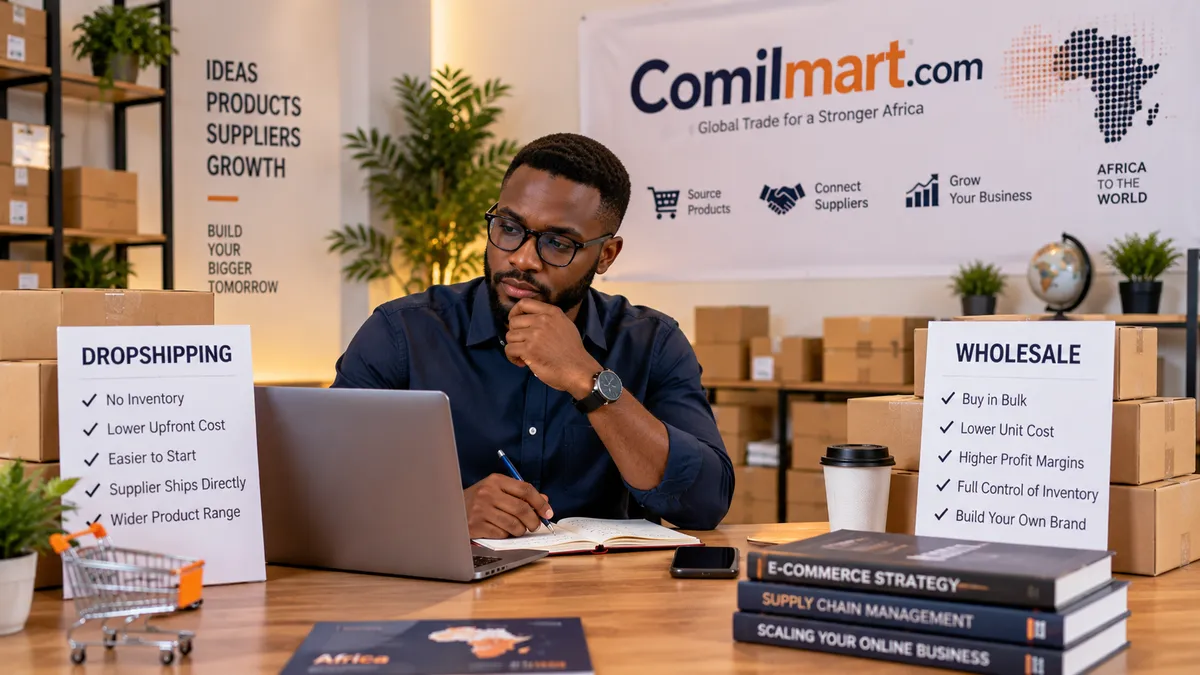
Dropshipping and wholesale buying are both ways to sell products without manufacturing them yourself, but they operate on fundamentally different logic — different capital requirements, different margins, different control over quality and fulfillment. Understanding the real, practical differences helps you choose the model that genuinely fits your business situation, rather than picking based on which sounds more familiar or is discussed more often online.
How wholesale buying actually works
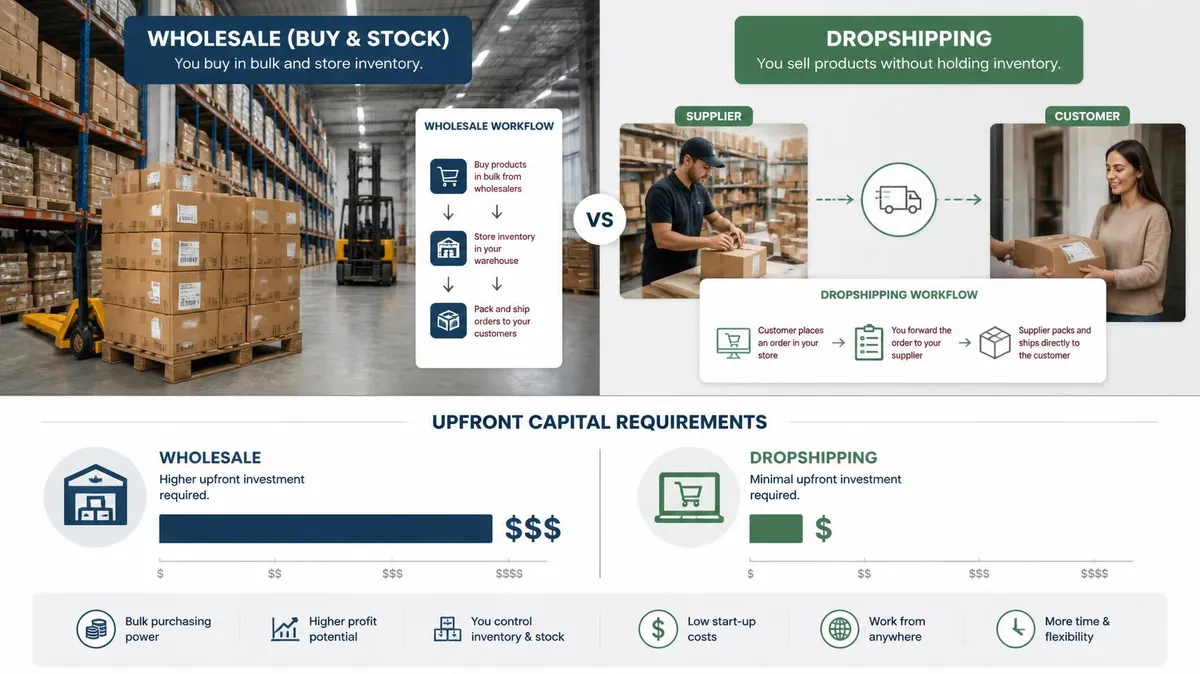
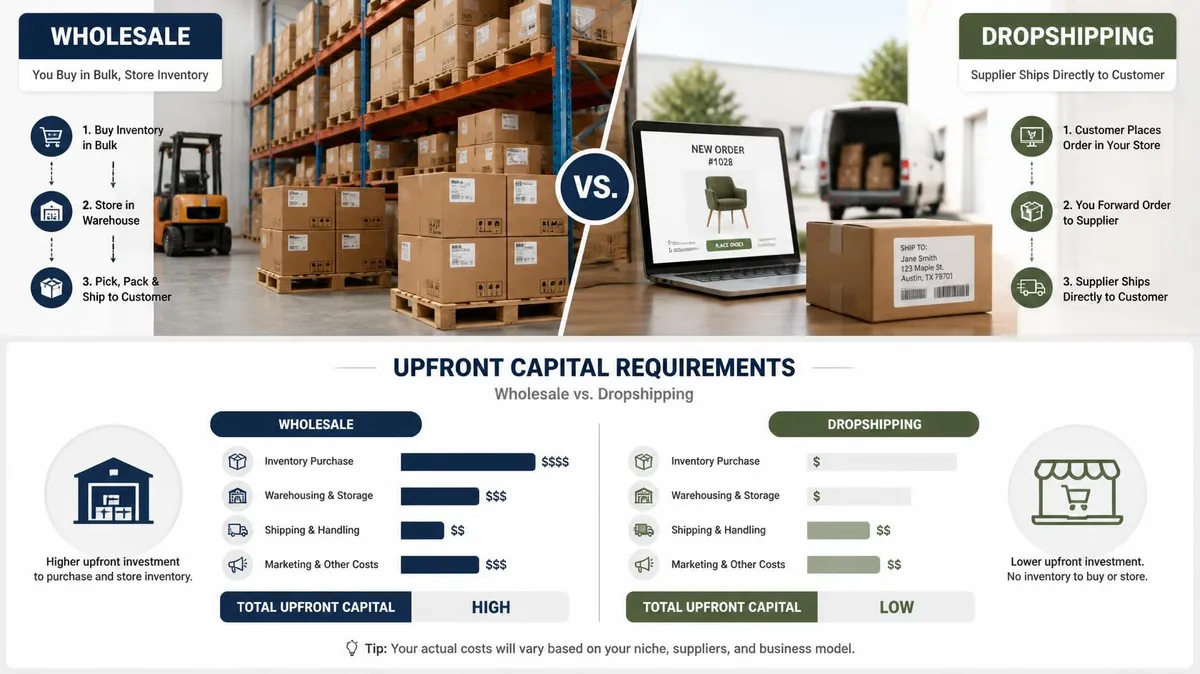
In the wholesale model, you purchase inventory in bulk directly from a manufacturer or wholesale supplier, take possession of that inventory (in your own storage or a fulfillment warehouse), and then sell and ship it to your own customers as orders come in. You're carrying real inventory, which means real upfront capital investment and genuine responsibility for storage, but it also means you have direct control over quality, packaging, and fulfillment speed.
How dropshipping actually works
In the dropshipping model, you list and sell products without ever holding inventory yourself — when a customer orders from you, you place a corresponding order with your supplier, who ships the product directly to your customer. You never physically handle the product at any point. This dramatically reduces the upfront capital required to start selling, since you're not purchasing inventory before you have a confirmed sale, but it also means you have less direct control over fulfillment quality, packaging, and shipping speed, since your supplier handles all of that directly.
Capital requirements: the most significant practical difference
This is often the single biggest factor driving a business's choice between the two models. Wholesale requires genuine upfront capital to purchase inventory before you've made a single sale — a real financial commitment and risk, since you're betting that inventory will actually sell. Dropshipping requires dramatically less upfront capital, since you're only purchasing product from your supplier once you've already secured a confirmed customer order, making it a genuinely more accessible entry point for a business without significant starting capital.
Margin differences worth understanding
Wholesale buying, precisely because it involves genuine bulk purchasing at wholesale pricing, generally offers meaningfully better margins per unit sold than dropshipping does — you're buying at true wholesale rates and selling at retail, capturing that full spread. Dropshipping margins are typically thinner, since your supplier is often selling at something closer to a single-unit rate even though you're technically buying "wholesale" from them, and the convenience of no inventory investment comes with a real cost in reduced margin per sale.
Control over quality and customer experience
With wholesale, since you physically handle inventory, you have direct control over quality checking before it reaches a customer, packaging presentation, and fulfillment speed — you can catch a quality issue before it becomes a customer complaint, and you control exactly how quickly an order ships once placed. With dropshipping, you're entirely dependent on your supplier's own quality control, packaging standards, and fulfillment speed, since you never see or handle the product yourself — this creates real risk if a supplier's quality or fulfillment reliability isn't what you expected, since you often only find out through customer complaints after the fact.
Inventory risk: a genuine tradeoff, not a one-directional advantage
Wholesale buying carries genuine inventory risk — if a product doesn't sell as expected, you're holding unsold inventory that ties up capital and storage space, a real financial risk dropshipping simply doesn't carry, since you never purchase inventory speculatively. This is a genuine advantage of dropshipping worth taking seriously, not just a minor point — particularly for testing new products or entering an unfamiliar category, where the risk of inventory that doesn't sell is a real, meaningful concern.
Which model tends to fit which business situation
Dropshipping tends to make more sense for a business testing new product ideas with minimal capital risk, a business without significant starting capital for inventory investment, or a business prioritizing a wide, easily-changeable product catalog over deep specialization in a narrower set of products. Wholesale tends to make more sense for a business with validated demand for specific products and the capital to invest in inventory, a business where quality control and fulfillment speed are genuinely important to the customer experience and brand, and a business aiming for the better margins that come with true wholesale purchasing at real volume.
A hybrid approach is genuinely common and often sensible
Whichever model you choose, if you need capital for a larger wholesale order once demand is validated, Comilmart's trade financing options are worth exploring.
Many businesses don't choose exclusively one model — using dropshipping to test new product ideas with minimal risk before committing capital, then transitioning proven, validated products to a wholesale buying model once demand is confirmed and the better margins and control genuinely justify the inventory investment. This hybrid approach lets a business capture the low-risk testing advantage of dropshipping while still building toward the better margins and control that wholesale buying offers for products that have proven themselves.
Supplier relationship considerations for each model
For dropshipping specifically, your supplier's own fulfillment reliability and speed becomes even more directly your business's reputation, since customers experience your supplier's fulfillment as if it were your own — making supplier vetting and reliability arguably even more critical for dropshipping than for wholesale, where you have your own fulfillment process as a buffer between supplier quality and final customer experience. For wholesale, supplier relationship factors like consistent product quality and reliable delivery timing to your own warehouse matter most, since you're the one managing the final customer-facing fulfillment yourself.
Frequently asked questions
Is dropshipping generally less profitable than wholesale in the long run?
Often on a per-unit margin basis, yes, but dropshipping's lower capital requirement and reduced inventory risk can make it a genuinely sound business model for the right situation, even with thinner margins — profitability depends on your specific execution and volume, not purely the model choice itself.
Can I switch from dropshipping to wholesale for the same product later?
Yes, and this is a genuinely common and often sensible progression — starting with dropshipping to validate demand with minimal risk, then transitioning to wholesale buying for products that have proven themselves, capturing the improved margins and control that wholesale offers once the risk of the product not selling has been meaningfully reduced.
Does dropshipping mean I have no relationship with my supplier at all?
No — even in a dropshipping arrangement, having a genuine, communicative relationship with your supplier matters considerably, since their fulfillment reliability directly becomes your business's reputation with customers, making supplier communication and reliability just as important, if not more so, than in a wholesale arrangement.
The bottom line
Dropshipping and wholesale represent genuinely different tradeoffs — dropshipping offering lower capital risk and easier entry at the cost of thinner margins and less direct control, wholesale offering better margins and genuine control at the cost of real upfront capital and inventory risk. Understanding which tradeoff genuinely fits your business's current capital situation, risk tolerance, and product validation stage — rather than assuming one model is universally superior — helps you choose the approach that actually serves your business well.